Understanding and Overcoming Implicit Bias for Personal Growth

Introduction: What is Implicit Bias?
It is one of those things that, though, most of us must have read or heard of before but may not have a clear understanding of. In other words, it means prejudice that people possess without being aware of the same; the prejudgement of some people based on one’s perception of the majority of the like people. Sexual biases for instance, work implicitly in determining how we interact with people and the decisions we make without necessarily discriminating. You may imagine it as a kind of a soft-ware, or a set scripts in your head that operate in the background, influencing your cognitions and behaviors.
The Science Of Implicit Bias
How Our Brains Form Biases
There’s something in the wiring of our brains that allows for short cuts. It is one way through which we make sense of the enormous information flood that is characteristic of our everyday lives. This is why biases form—our minds make distinctions based on prior instance, prejudice and prejudices or cultural influence. Whereas these shortcuts are helpful, it must be realized that they may also bond us into thinking something which is neither equal to or kosher.
The Social Conditioning
This is because most of our prejudices are automatically instilled in us by society. Starting from childhood, people receive certain ideas from the surrounding community, messages coming from mass media, and cultural information about the world. And these messages can come from family, friends, media, etc, which makes them rather easy to consume and accept about different groups of people. Ideally, these messages are internalized even though, sometimes, we may not consciously subscribe to them.
Types of Implicit Bias
Bias can be seen in many forms, and I will discuss these forms in detail in the following points. Here are some common forms:
Racial and Ethnic Bias
It involves prejudices, or pre-established beliefs regarding several racial or ethnic populations. For instance, a person might have formed a certain stereotype about a certain race not knowing that it was in fact an invented stereotype resulting from what they have been led to believe.
Gender Bias
Gender bias means belief in bias towards a particular gender, that is assuming something based on the gender of the person involved. This could be to think that women are supposed to be the ones that care or feel that men are naturally better to lead.
Age Bias
The stereotype is one in which people are judged on the basis of the age. This can be as simple as assuming an old person does not understand technology or assuming a young person is immature.
Implicit Bias and its Relation to Personal Transformation
How prejudice distorting our visions and perceptions exists?
The framework placed great emphasis on the fact that implicit biases can be extremely constraining when it comes to our ability to see and navigate the world. These biases can blind us to who individuals are, what they are capable of, whether it is at work or in and around the sphere of interpersonal relationships. But what would it be like to wear glasses with colored lenses put on them and you’re perceiving things not as they really are but as through the lenses of your prejudice.
The Consequences of Ripple Effect on Relationships and Opportunities
People do not understand that self-Implicit bias not only affects you but impacts everyone around you. These are just some of the lives people lose when they are haunted by these biases which alter career and friendship prospects.
How to Detect Your Implicit Biases
Completing the Implicit Association Test.
The first thing that one has to learn in order to counteract this is to identify it in oneself. I personally like the Implicit Association Test (IAT), because it indicates the biases that you don’t even realize you have. Said the author of the American glossy magazine of psychology, it resembles a mirror reflecting one’s sub-consciousness.
Writing one’s day to day interactions and personal thoughts about them
The second strategy which can be used to identify implicit bias is through journaling. If you walk around, stop during the day or think about your interactions, you can start to see trends in your attitudes towards others. It is somewhat reminiscent to the detective show — deciphering signs that point to a better understanding of who you are.
Fighting for Disconfirmation: Implications for the Lynnwood Police Department
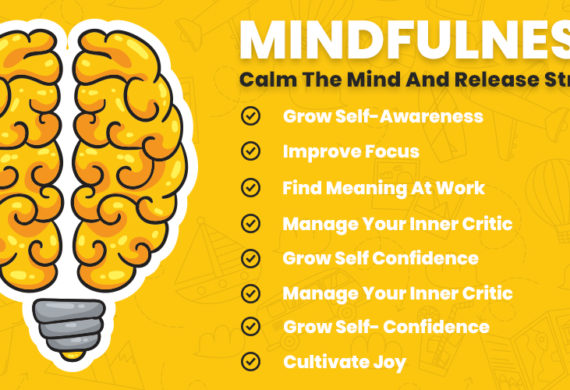
Mindfulness as well as self-awareness
This means that if you want to deal with implicit bias, you should be very careful with what you do. If you pay attention to your thoughts, with due attention you will find yourself still in time to realize that you are gradually developing a biased assumption. It leads to an awareness of self; it slows down thoughts and action that transform them from being reactive.
General Information on Meditation: For Self –Exploration
This mindfulness can be boosted by meditation. Techniques as basic as deep breathing or body scans let you restore yourself and start to pay attention to your head again. It’s kind of pulling out a mental focal lens that in turn will show all biases and directly address them.
Social interdependence refers to participating in different activities.
An effective strategy to tackle implicit bias is to engage in the world and experiences that are different from one’s own. This could mean going to attend cultural festivals, reading books from different viewpoint, or even trying as much as possible to make new friends from other cultures. The more exposure you give to diversity, the more you ensure that you are questioning the tryptic algorithms in your brain.
Overcoming Your Misconceptions
In case you’ve found yourself assumptive due to bias, do whatever it takes to challenge it. But where did this assumption come from? Is it fair? Practicing to dispute these thoughts on a daily basis will assist in changing the neural pathways of the brain to be less prejudice.
Continual learning is very important.
Implication of Understanding Through Reading, Watching, and Listening to Diversity
Growth is a lifelong process and so is changing oneself from an implicit bias perspective. Try to get in a practice of seeking out information and points of view that are contrary to your own. Whether one reads books or watches documentaries or listens to podcasts, it helps to get all the possible angles of how people see the world.
Applying What Was Learned From One’s Mistakes and Being Accessible to Constructive Criticism
You will screw up —so will any other person out there. The only thing that counts is whether or not you get stuck on those mistakes. The common enemy we face is the tendency to feel defensive when feedback is offered, which you should welcome. This openness will assist you not only in eliminating bias, but will also lead to self-improvement.Were forming the Attitudes, Perceived Social Norms and Self-Efficacy to Overcome prejudice
In this article, you will learn how it is possible to overcome boundaries using empathy.
The ability to use imagination and understanding to put oneself in another person’s shoes is probably one of the best ways of managing and combating implicit bias. Whenever one is cast in someone else’s role they are likely to essentialize, it becomes difficult to stereotype. The things is empathy holds the position between different individuals, and this negates the barrier that is usually established by prejudice.
Empathy in Everyday Life: Strategies for Development
Embrace the idea of empathic listening and get involved in people’s lives and their stories of life. Daily niceness; being a little more tolerant; treating my colleagues more warmly will a long way towards minimizing prejudice.
The Advantages of Default-Other ER for Self-Development
The gatherings aggrandized the relationships and communication given that all of them insist on a blend of mechanical and social science as sophisticated tools.
The benefit is that, by doing this, you will discover that your relations have turned for the better. In your workplace or business, or even in your interpersonal relationships, you’ll find that you’ll be more honest and less inflenced with biases when speaking.
Areas of career and personal development
Personal development is not only growth into a better person, but it is also the process of building opportunities for yourself. In other words, by avoiding bias, you create the opportunity to work with people whom you may have originally disregarded, and bring in new ideas and opportunities for your career growth.
Conclusion: Growth and its relation to biased practices up for recognition and change
It is important to explain that the process of eradicating implicit bias is a lifelong process. Staying aware, actively seeking out such encounters and indeed questioning your own presuppositions is the first step to growth. It’s not just a business of eradicating bias—it’s about embracing an opposite direction —to become a better person or a more sensitive, first and foremost. Well, there is no time like the present if you are willing to embrace embracing that first step change towards an expanded paradigm of diversity?
FAQs
What is implicit bias?
The definition of implicit bias is that people hold ‘out of conscious awareness and control’ certain attitudes or stereotypes that can indeed influence the way people behave.
How can we search for those hidden prejudices within ourselves?
There are ways of challenging the implicit bias, for instance, through the IAT, and journaling and self-reflection.
Why is working through the hidden prejudice crucial for self- development?
Elimination of prejudice helps one think more objectively, strengthens interpersonal communication and creates a way for new possibilities in one’s own life as well as in his profession.
Being aware of IBI could be quite challenging, and thus, everyone should consider the following question: How could one minimise IBI effectively?
Measures include engaging oneself in mindful acts, engaging with different situations, and developing compassion for others.
However, when it comes to the question: Can implicit bias be eradicated?
Thus, even if it is impossible to completely rid yourself of bias, consciously addressing and correcting your thinking can drastically decrease the influence of those thoughts.
Sign Up To Get The Latest Digital Trends
Get free Consultation on Personal Development
Related Posts