Developing Emotional Intelligence: The Key to Personal Success

Introduction
Have you ever asked to yourself how some people just appear to be winners in life and have it easy? They are able to cope with stress in dealing with their daily lives, build interpersonal relationship harmoniously, and manage and organize themselves as if things in life are already in a simple order. It is always hidden in the level of emotional intelligence that the managers possess. Here is what emotional intelligence is and how it’s possible to take personal success to another level.
Understanding Emotional Intelligence
Definition
Emotional intelligence can be defined as the capacity to successfully navigate the social world with awareness of one’s own emotional states as well as the emotional states of others. Awareness of emotions is just one part of it, and the other part is the ability to alter its thinking and actions based on that awareness.
Importance of Emotional Intelligence
What is so important about ‘emotional intelligence’? Oh, well it influences virtually all areas of our lives. In our jobs, and in our interpersonal relationships, in fact in all spheres of life, EI is a key mediator of how we deal with the environment.
The components of emotional intelligence are as follows:
Self-Awareness
Awareness of the self is the first and the most important level of EI. It entails getting to define self-awareness as an important element in SEL and that it focuses on how one recognizes their own emotions and how such emotions shape their thinking and actions. What it is, is knowing what your capabilities are and what your faults are and having confidence in yourself.
Self-Regulation
While being aware of emotions is the first step, the second and very important step is using them. Self-regulation refers to the ability to suppress thoughts and actions that may be destructive to a person’s self and also to exhibit positive feelings towards a task in order to exercise positive influence over the completion of the assignments.
Motivation
In the sphere of EI motivation is defined as a desire to perform for the sake of performing. It is all about having something to do with passion other than just getting paid and having a good rank, getting better and being hopeful even when things are not going good.
Empathy
Sympathy is news to me, it means it is the capacity to feel what others feel. Emotional intelligence is more about perceiving other people’s experiences and opinions indicating active interest in their matters. In the present climate empathy is a vital element while nurturing relations with another person.
Social Skills
According to Snook and Nohria, social skills are about the leveraging control in relation to other people to achieve specific outcomes. It is a subject that teaches efficiency in the conveyance of information as well as the management of disagreements and the ability to form connections.
Advantages of EI Development
Personal Relationships
EI, in essence, refers to the capacity to experience emotions, recognize their presence and value in others, and manage one’s emotions constructively; its enhancement can boost interpersonal relations. It enables one to express himself or herself better, deal with disagreements, and establish better relationships.
Professional Success
Of all the attributes of learning, therefore, EI remains central to career success in the workplace. They include efficient teamwork, leadership and stress management as it can produce good results when effectively implemented to the society. For one, EI when high increases your chances of being a better leader, colleague, or employee because you notice and can regulate your interactions with others.
Mental Health
Mental health is also closely related to a person’s emotional intelligence. This way it is possible to avoid or minimize such feelings as stress, anxiety and depression, or to control these states if they occur.
Strategies Towards a Better Emotional Intelligence
Self-Reflection
Another crucial facet of applying EI in the organization is self-reflection as it enhances the individual’s EI. This means that one needs to learn how to take sometimes to understand emotions and behaviors. It may also be useful to keep a record using a journal on how one is experiencing those stimuli to see any patterns.
Mindfulness Practices
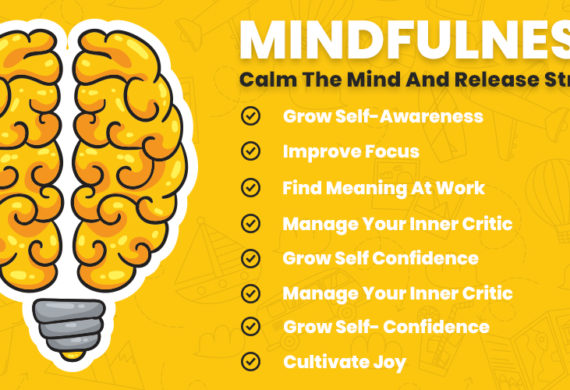
Each of the identification techniques listed above helps in practicing mindfulness and enhance ones ability to identify the emotions that one has. Practical tools include meditation, deep breathing, and others are very helpful in this case.
Feedback Seeking
Do not avoid asking people about feedback. Share the feelings and behaviours that concerns you with friends, relatives and/or coworkers. Critique can be helpful if it is positive in nature and offers good advice at that.
Building Self-Awareness
Journaling
Journaling is one of the strategies that may foster self-awareness as a person. Journaling involves putting down your feelings and ideas and by so doing, you are able to determine coercion factors as well as responses.
Meditation
Meditation is also useful in increasing your self- awareness. This helps you to watch your thoughts and feelings without necessarily criticizing yourself, which often is productive.
Enhancing Self-Regulation
Impulse Control Techniques
One of the significant areas in self-regulation is learning manners of how to tame overactive impulse. It is possible to attempt to just stand still and take a few breathes before one responds to a particular situation.
Stress Management
Stress management is generally considered as an aspect of self-regulation. Assign yourself some healthy stress relieging activities that one can do in-between stressful working schedules like exercising, other forms of activities or just going out with your family and friends.
Cultivating Motivation
Goal Setting
To grow motivation, it is recommended to establish the goalposts that are challenging but not impossible to attain. Learn to take giant goals, which may be difficult and daunting, and break them down into small achievable goals that are easy to master then applaud the little efforts which you have achieved.
Positive Reinforcement
Reward yourself for the work you do in order to encourage yourself to continue working. Ensure that you give yourself a reward for every journey you complete and for every good job that you’ve done in exercising towards the benefits of your reaching the particular goal that you’ve set for your-self.
Developing Empathy
Active Listening
Cultivate the habit of active listening as the foundation for understanding people’s needs and emotions. Actively listen with people without themselves speaking and inform them you heard what they said.
Perspective Taking
Learn to look at things from other people’s points of view. Based on the personal experience, I can say that sometimes just pretending to be the tone of the other person can assist in a better response from the other side.
Improving Social Skills
Effective Communication
Social skills involve communication skills in particular, and this means that they are also effective if properly utilized. Thus, one should avoid using abusive language or aggressive body language when dealing with the employees. Pay attention to how and what you are saying because how you carry yourself has a way of influencing others.
Conflict Resolution
Hunt for conflict solving skills to enhance your social skills. Always approach the conflict with an open mind and pay a lot of attention in coming up with solutions that will be beneficial to both parties.
Emotional intelligence as a factor of leadership
Influence and Inspiration
This is particularly due to the fact that highly EI leaders are able to motivate and persuade people. They can touch the hearts of the team members; thus, the team develops confidence and regards the leader.
Team Building
Emotional intelligence is an essential aspect that should be practiced in the aspect of team building. In the light of this, leaders and team members who are responsive to emotional interactions in that that they regulate and monitor their own and other’s emotions can cultivate a productive team.
Emotional intelligence in workplace can be defined as the employee’s ability to recognise own feelings and the impact that such feelings may have on the employees themselves as well as their co-workers.
Workplace Relationships
Having High EI leads to good Relations at the workplace. When employees possess emotional intelligence, then they can be able to engage in proper communication, conflict management and team work.
Productivity and Performance
There is evidence that improvement of the emotional intelligence leads to increase of the productivity and efficiency. Stressful work events can be described as modifications in the environment where employees are able to regulate emotional states that are relevant to it.
Some of the Myths about Emotional Intelligence
The first myth, therefore, is that EI is fixed.
A few of them are that EI is innate and cannot be trained or improved, people with high EI are not intelligent and vice versa. Actually, studies have postulated that it is possible to increase one’s emotional intelligence in a given extent.
Myth 2: EI is Inherently Feminine
A final myth is that EI represents the feminine side in people. The aspect of emotional intelligence is not attributed to any gender; it is an asset of every individual.
Measuring Emotional Intelligence
Self-Report Questionnaires
As for self-report measures of EI, the following instruments can be mentioned: Such tests can give some information about the main emotions individuals are equipped with and their weak sides.
360-Degree Feedback
In essence, 360-degree feedback employs results from different people, commonly subordinates, peers and bosses. Such a holistic feedback can help to get a rather broad picture about one’s EI.
Conclusion
Each of us needs to listen to our inner self, first locally, then globally. Once you work on your EI, people, goals and overall well-being will be the beneficiaries on the improvement. Emotional intelligence cannot be fully developed, but starting the process at any age is better than not starting at all. Do not forget that gradual steps are the most effective for triggering transformations.
FAQs
What is emotional intelligence?
Emotional intelligence is therefore defined as having a capacity to accurately perceive, express, understand and regulate one’s own emotions and a capacity to accurately perceive, understand and manage other people’s emotions.
What strategies can help build or increase my emotional intelligence?
You can improve your EI through self-reflection, mindfulness practices, seeking feedback, and working on the five components of EI: skills that include the ability to better understand themselves, their emotions, and their behavior as well as to be able to engage with others and be motivated, all these are grouped under the following; self-awareness, self-regulation, motivation, empathy, and social skills.
Why is EQ crucial in leadership?
EI is valuable in leadership since it enable a leader to relate well with the people, encourage his subordinates, solve for common confrontations and even foster a healthy organizational culture.
Studies have indicated that EQ or the emotional intelligence quotient can indeed be measured and this has been proven by the different researches that have been done on the topic.
Indeed, emotional intelligence can be assessed using self-assessment questionnaires, where people assess themselves, and/or through multi-source feedback, where subordinates, peers and supervisors provide a feedback on the person inconsideration.
Some of the commonly existing myths about emotional intelligence include:
There are several myths that are familiar, these being that EI is not a talent that can be grown and that EI is a gender specific attribute. In fact, EI is a ability that can be enhanced through practice and is beneficial to all people.
Sign Up To Get The Latest Digital Trends
Get free Consultation on Personal Development
Related Posts